CatalogKeeper
Level 1 New
Overview CatalogKeeper is an AIpowered MCP auditor that automatically detects and prioritizes gaps between your deployed Model Context Protocol MCP servers and their upstream APIs. This agent systema…
 Engineering & Dev Tools
How this Pal works
Screenshots
Description
Overview
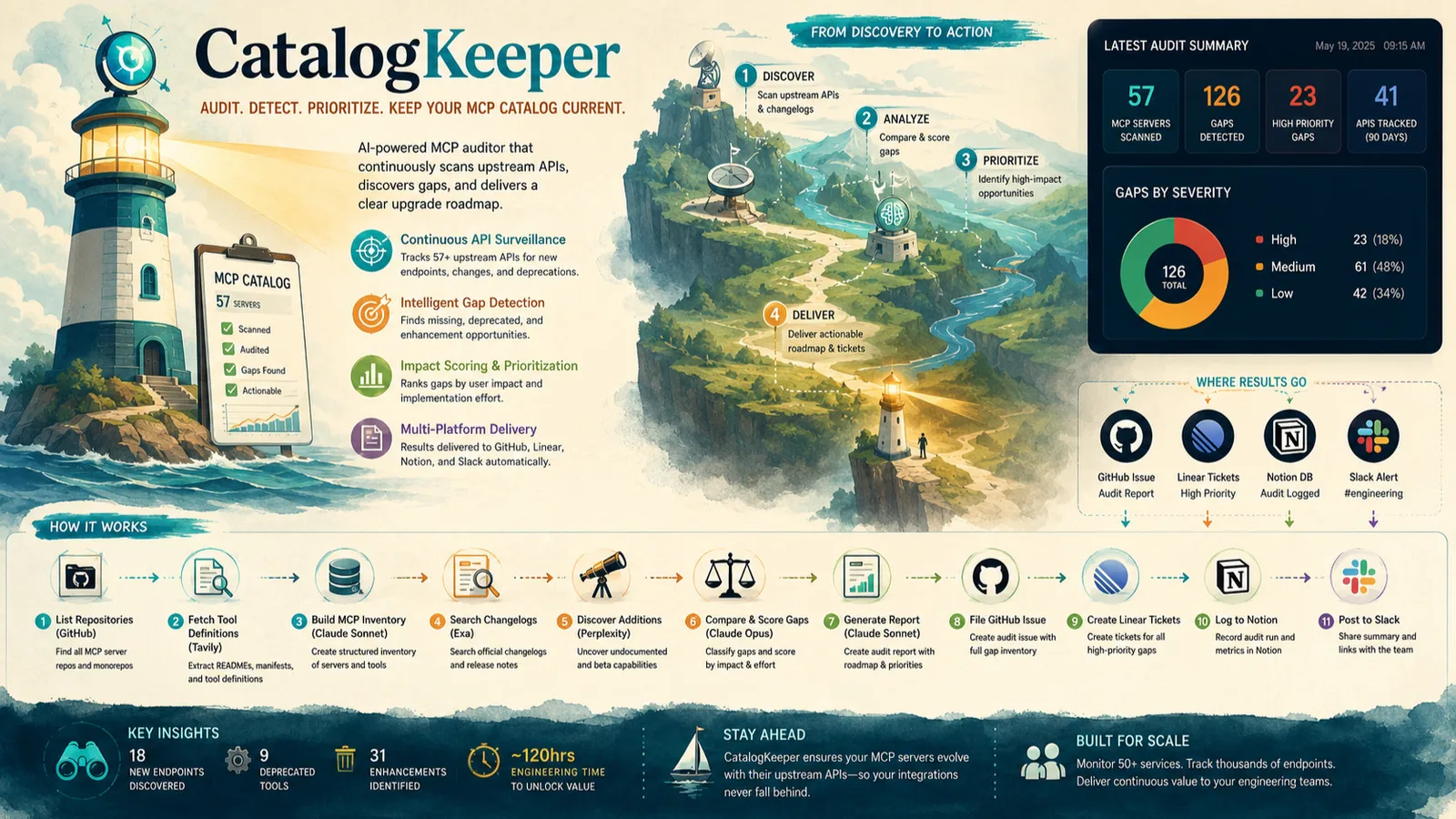
CatalogKeeper is an AI-powered MCP auditor that automatically detects and prioritizes gaps between your deployed Model Context Protocol (MCP) servers and their upstream APIs. This agent systematically scans all 57 MCP server definitions, discovers new API endpoints and capabilities released in the last 6 months, identifies missing or deprecated tools, and delivers a structured upgrade roadmap to your engineering team via GitHub issues, Linear tickets, and Slack notifications. It eliminates manual API tracking and ensures your MCP catalog stays synchronized with rapidly evolving third-party services.
How It Works
-
List Repositories (GitHub) — Query the CogniPal GitHub organization to identify all active MCP server repositories matching the 'mcp-*' naming pattern and monorepo structures.
-
Fetch Tool Definitions (Tavily) — Extract README files, package.json manifests, and tool definition files (TypeScript/JSON) from each repository to compile a complete inventory of currently exposed tools.
-
Build MCP Inventory (Claude Sonnet) — Parse and classify all MCP servers into a structured database: service name, upstream vendor, exposed tool list, and tool count. Identify the authoritative upstream API (e.g., "HubSpot CRM API", "Stripe Payments API").
-
Search Official Changelogs (Exa) — Perform semantic and keyword searches for API changelogs, release notes, and developer announcements published by each upstream service in the last 90 days.
-
Discover Undocumented Additions (Perplexity Reasoning) — Use chain-of-thought reasoning to uncover lesser-known API capabilities, beta features, and recent enhancements not widely publicized in official docs.
-
Compare & Score Gaps (Claude Opus) — Systematically match exposed MCP tools against discovered upstream capabilities. Classify gaps into three categories: Missing Endpoints (new upstream features not exposed), Deprecated Tools (MCP tools calling removed/sunset endpoints), and Enhancement Opportunities (tools that could leverage new upstream parameters). Assign impact scores (High/Medium/Low).
-
Generate Upgrade Report (Claude Sonnet) — Synthesize findings into a professional audit report with executive summary, gap table sorted by priority, effort estimates, and recommended sprint scope.
-
File GitHub Issue — Create a detailed audit issue in your MCP monorepo with the complete gap inventory, checklist of actions, and relevant labels ('audit', 'mcp-upgrade').
-
Create Linear Tickets — For each High-priority gap, automatically generate an engineering issue in Linear with upstream API references, implementation details, and effort estimates.
-
Log to Notion — Record the audit run in your MCP Catalog Notion database, tracking audit date, scope, gap counts by severity, and links to results.
-
Post to Slack — Deliver an executive summary to #engineering highlighting top gaps, impact metrics, and direct links to the full audit for team review.
Key Features
- Continuous API Surveillance — Automatically tracks 57+ upstream APIs for new endpoints and deprecations using semantic search and reasoning models, eliminating manual changelog reviews.
- Gap Prioritization & Scoring — Intelligently categorizes missing features into actionable gaps ranked by user impact (High/Medium/Low) with effort estimates for sprint planning.
- Multi-Platform Delivery — Routes audit results to GitHub (searchable archive), Linear (engineering workflows), Notion (knowledge base), and Slack (team awareness) in a single run.
- Undocumented Capability Discovery — Uses advanced reasoning to find beta features, unofficial API additions, and lesser-known service capabilities beyond published docs.
- Audit Trail & History — Maintains complete audit records in Notion, enabling teams to track MCP drift over time and measure upgrade velocity.
Use Cases
- Quarterly MCP Catalog Audits — Engineering teams run CatalogKeeper quarterly to identify which of 57+ MCPs have fallen behind their upstream APIs and plan upgrade sprints with confidence and clear prioritization.
- Post-Acquisition API Integration — When CogniPal acquires or partners with new SaaS platforms, automatically audit all new MCP wrappers against live APIs to ensure feature parity before launch.
- Deprecation Risk Management — Detect when upstream APIs sunset endpoints and proactively flag MCPs using deprecated capabilities before they break in production.
- Feature Roadmap Alignment — Product teams use the gap report to align MCP feature requests with upstream API releases, identifying high-impact additions to expose next that unlock customer value.
More by Cognipal
 WI
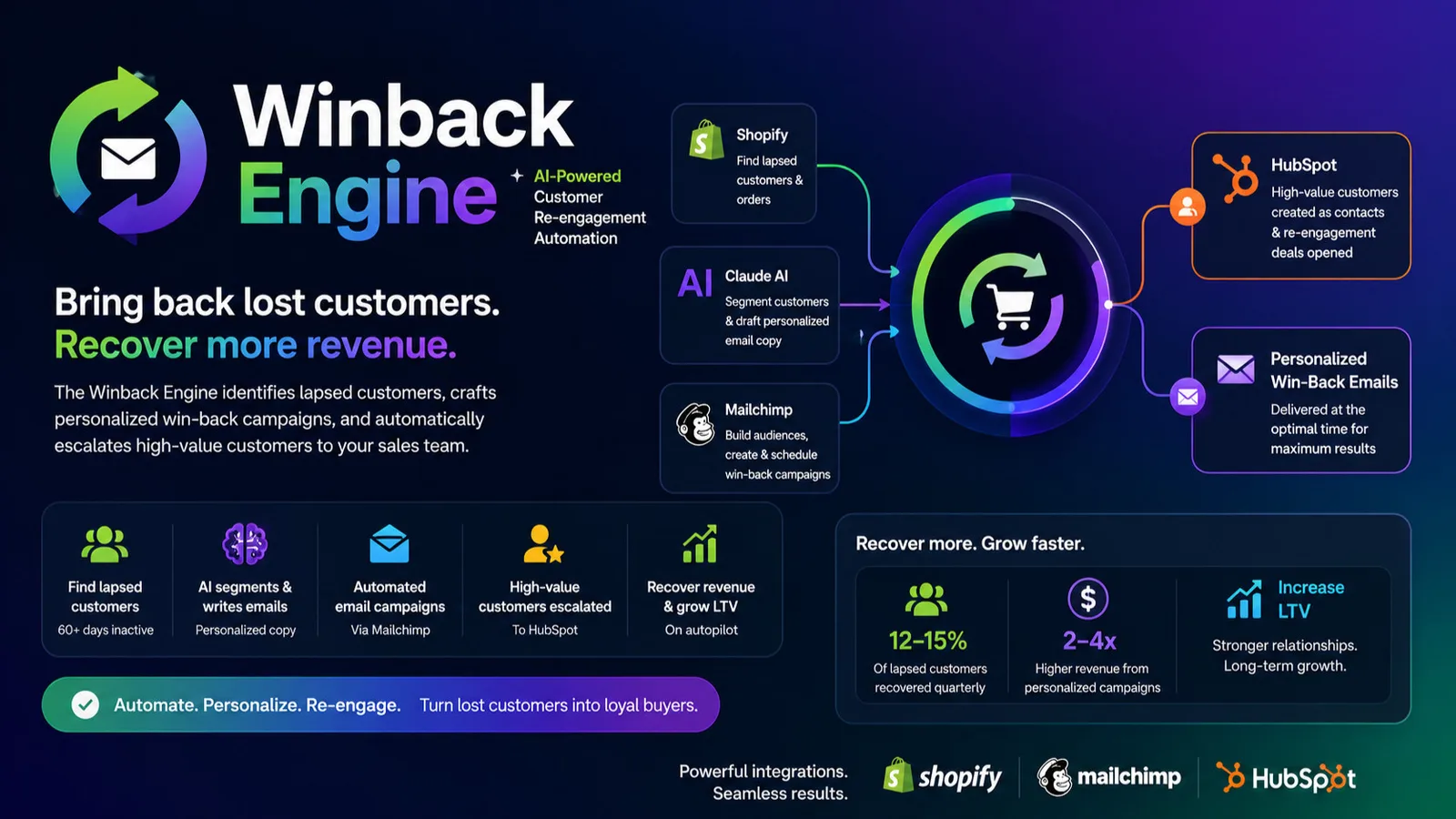
WIOverview The Winback Engine is an AIpowered customer reengagement automation agent designed for ecommerce operators, DTC brand marketers, and Shopify store owners. It identifies customers who haven'
Marketer +2Marketing & GrowthToday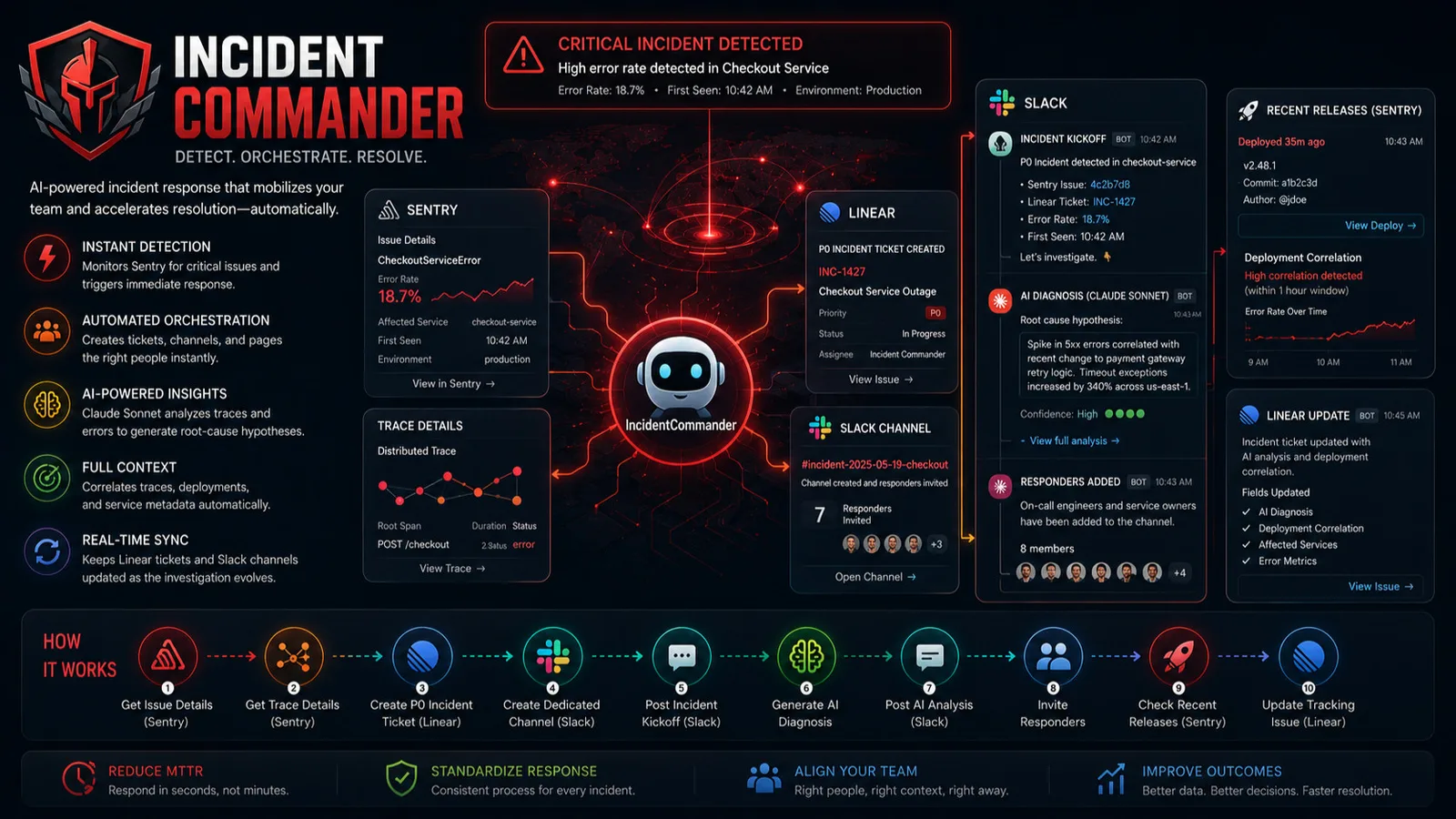 IN
INOverview IncidentCommander is an AIpowered incident response automation agent that detects production issues and orchestrates immediate response across multiple platforms. When a critical incident i
Alert & Monitoring +2Engineering & Dev ToolsToday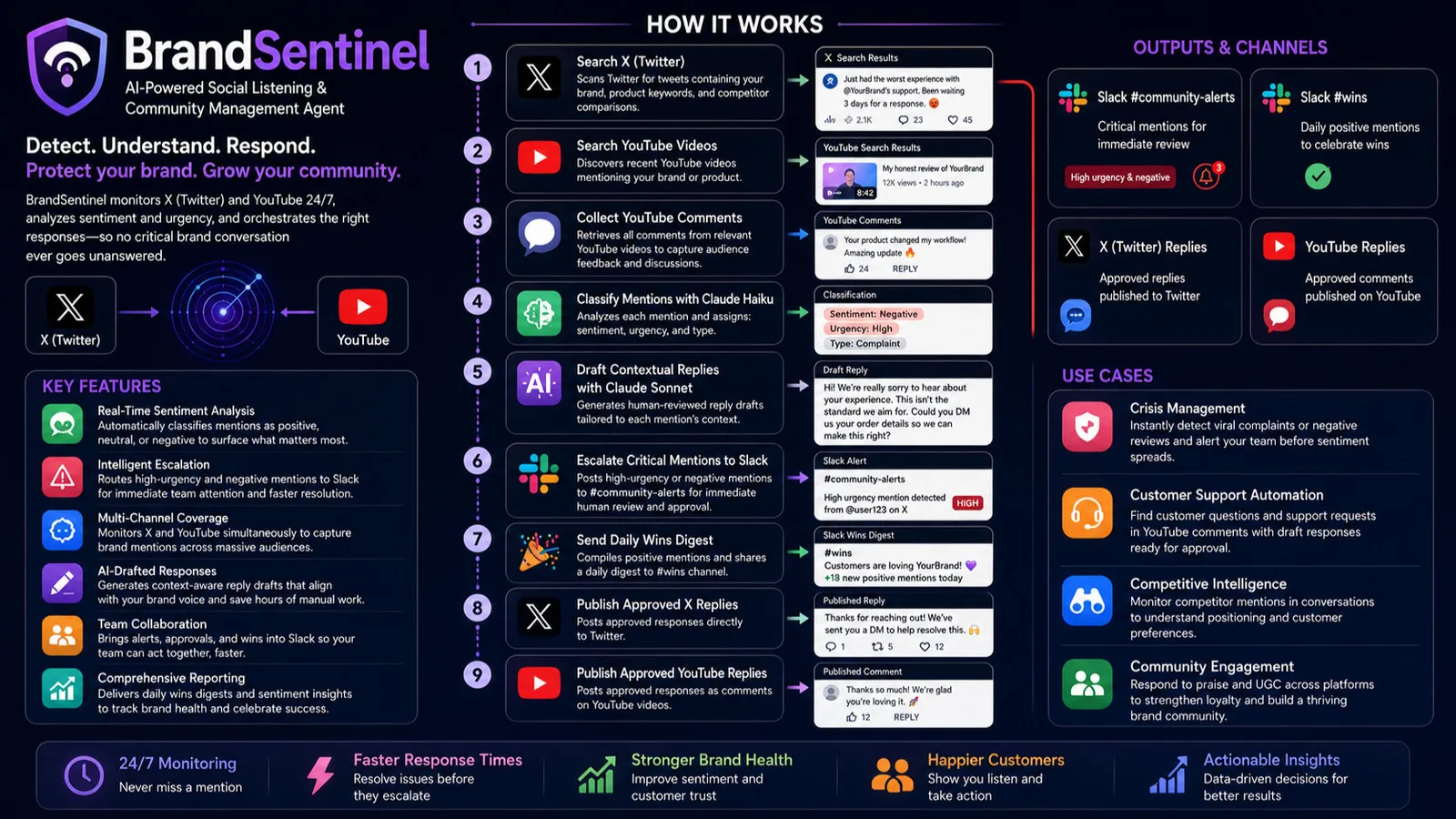 BR
BROverview BrandSentinel is an AIpowered social listening and community management agent that monitors X Twitter and YouTube for brand mentions, automatically classifies sentiment and urgency, and orc
Social Media +4Content & MediaToday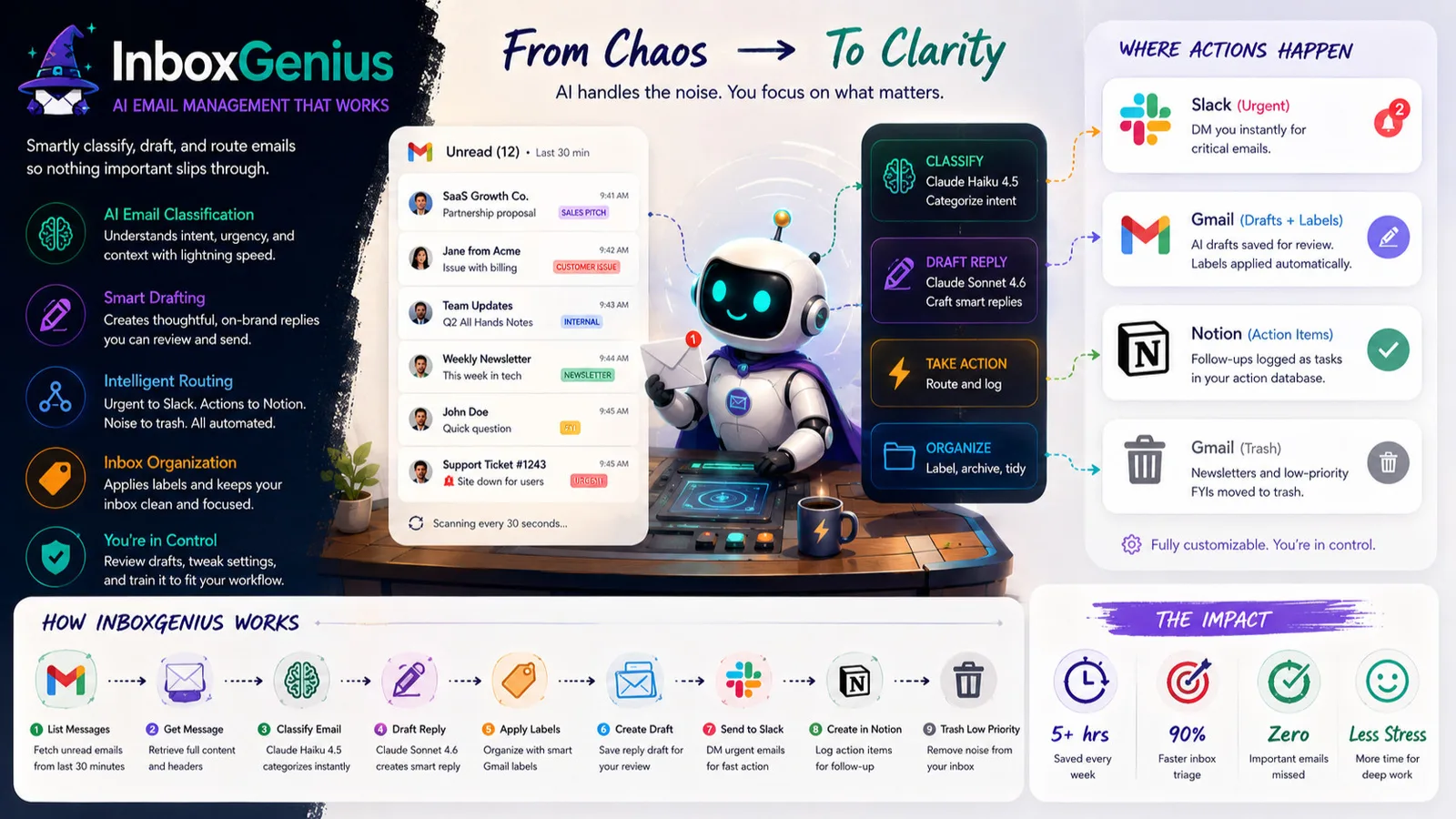 IN
INOverview InboxGenius is an AIpowered email management agent that transforms how teams handle incoming Gmail messages through intelligent classification, automated drafting, and smart task routing. T
Solopreneur +7Operations & ProductivityToday
You might also like
 RE
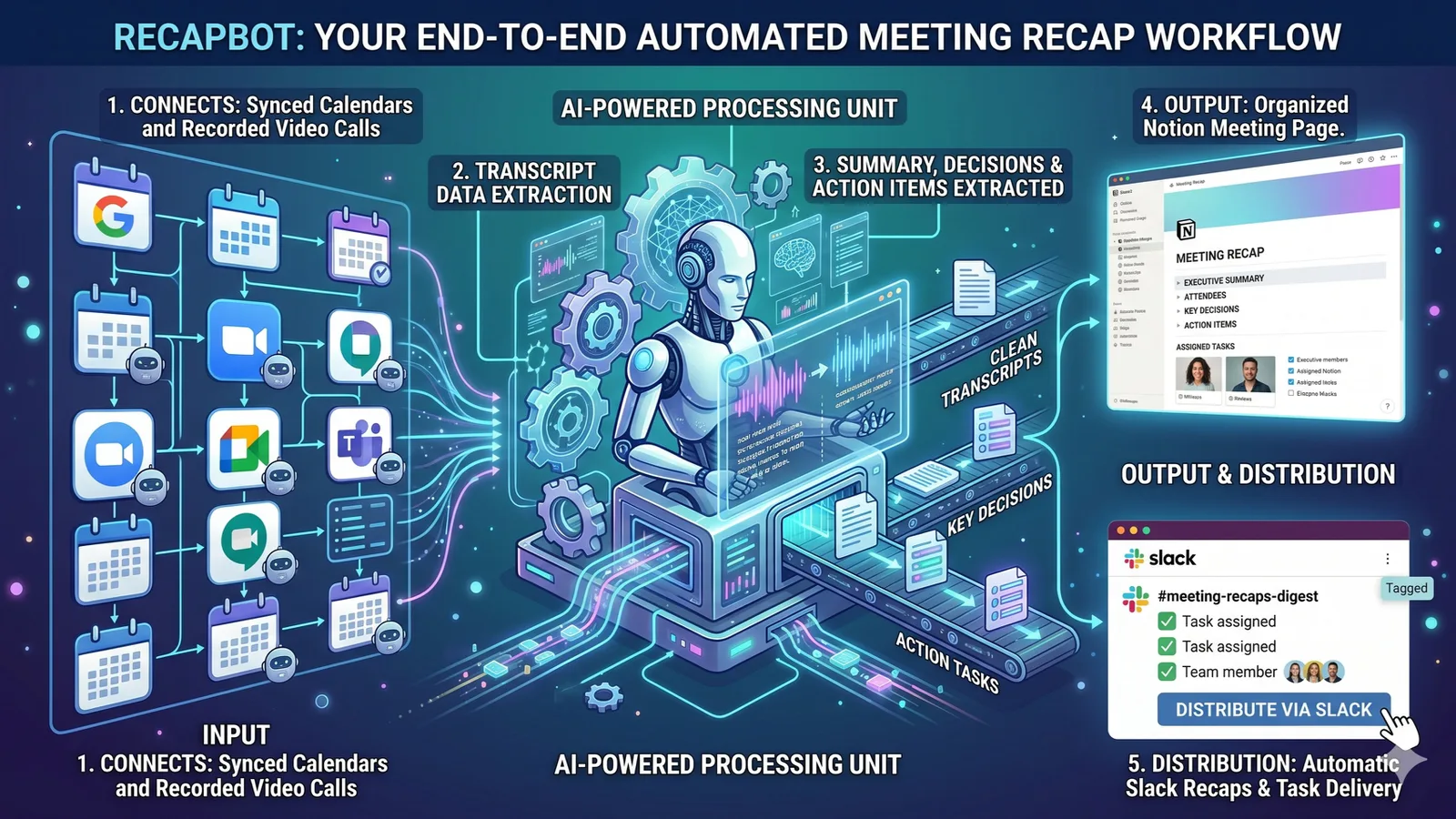
REOverview RecapBot automates the entire meeting recap workflow for hybrid teams using AIpowered transcription and structured data extraction. This intelligent agent captures Zoom, Google Meet, and Te
Summarization +3Content & MediaToday
Packs by this creator
Discussion
Sign in to join the conversation.
Sign inNo comments yet. Be the first to share a thought.